
For Horror Films to Truly Linger, the Endings Must Resonate
Posted on January 29, 2019 4 Comments
(Warning: Spoilers for Suspiria, Mother!, Hereditary, and The Witch.)
Over the past couple of years there has been a rejuvenation of contemporary horror films. Some are calling it “evolved horror” others might lean into “literary horror,” but whatever you want to call this impressive wave of new horror, the key to success comes in a powerful, layered, impactful ending—one that resonates, and stays with the viewer. Let’s look at four examples, to see what works, and what doesn’t.

THE FAILURE
Suspiria (2018)
Description: “A darkness swirls at the center of a world-renowned dance company, one that will engulf the artistic director, an ambitious young dancer, and a grieving psychotherapist. Some will succumb to the nightmare. Others will finally wake up.”—IMDB
For the majority of this film I was mesmerized—the art direction and cinematography, the acting of Tilda Swinton and (surprisingly) Dakota Johnson, the homage to the original, and the new ways in which the film cut, and moved, and captured our attention. On the big screen the film was immersive.
So it was such a disappointment to see the ending come apart. Not just in small ways, but an epic failure of biblical proportions. What went wrong? First of all, the shift in tone. What had been a stylish, creeping, alluring film turned into a splatterpunk ending, the gore feeling out of place. It just didn’t match most of what came before. I know, I know—the dancing scene, the bending, breaking, and crushing of the dance next door. But there was so much TO that scene—style, emotion, dance, music, sensuality. On top of the gore, the special effects and CGI at the end were terrible. I don’t think the look they were going for was Fraggle Rock horror. Muppets aren’t scary. It was laughable. What had been a truly special journey into madness, old spirits (or witches), and gaslighting descended into B-movie violence and unintended humor. Not good.

THE QUESTIONABLE
Hereditary (2018)
Description: “After the family matriarch passes away, a grieving family is haunted by tragic and disturbing occurrences, and begin to unravel dark secrets.”—IMDB
This was one of the best horror films I’ve seen in a long time. It was stylistically filmed, the actors were once again amazing (Toni Colette, especially), and it was very original. It kept me on my toes the whole way through, lots of surprises, including the various beheadings, bursting into flame, ants, reflections, and other unsettling moments. Tense throughout, the gore was sprinkled in here and there—which worked. Not shock just to shock, but building up to intense moments, where the visuals and weirdness matched the tone.
So what happened at the end?
It wasn’t nearly as bad as Suspiria, but it wasn’t as strong as I think it could have been, either. First, there were the lingering shots of naked cult members, and their decapitated torsos. Whenever the camera lingers on something as gory as that for too long, there is a chance that it will overstimulate the audience, who will either look away, or find it distressing, or even humorous. It’s a delicate balance. Add to that the huge information dump about Paimon, and it’s a less than satisfying ending. Yes, there were clues about what was coming, but until that information was spoon fed to us, we never could have figured it out. And that was a mistake, I think. Not a critical error, the film will still be celebrated, but a bit clunky and heavy-handed.
THE INTOLERABLE
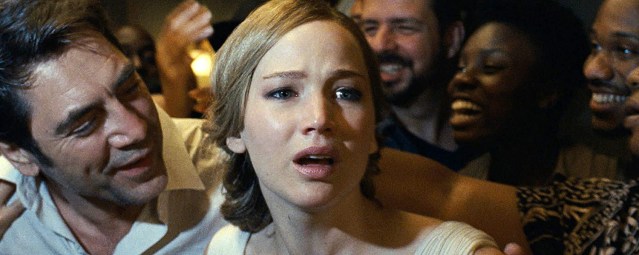
Mother! (2017)
Description: “A couple’s relationship is tested when uninvited guests arrive at their home, disrupting their tranquil existence.”—IMDB
That description doesn’t even HINT at what’s coming. I should have known, having seen Requiem for a Dream, that director Darren Aronofsky was going to challenge me. And he did. While the ending for Requiem was intense, not allowing us a place to breathe or relax, Mother! does the same thing, for much longer (fifteen minutes versus five). The film was a brilliant allegory, told in colorful, surreal, almost reverent tones at time, slowly cranking up the tension. And for the bulk of the film, I was mesmerized. Where it went off the rails was the fever dream, the baby eating, the span of time that went on and on and on. In hindsight, I do understand better what Aronofsky was going for, but if people are walking out, if they don’t finish the film, then what have you really accomplished? I know he wants us to see the depravity of man, to suffer along with them, but at what cost? Risky. I do think what comes AFTER those scenes, the rebirth, the loop, is effective. But the journey—very difficult. There’s problematic, there’s polarizing, and then there’s a total disconnect.
THE SUCCESSFUL
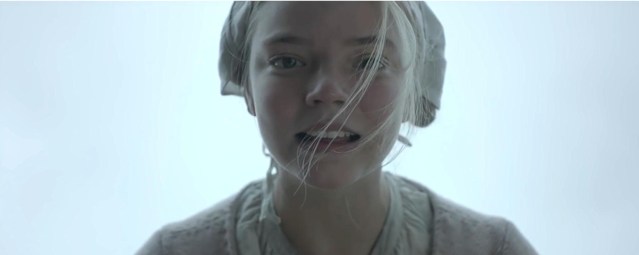
The Witch (2015)
Description: “A family in 1630s New England is torn apart by the forces of witchcraft, black magic and possession.”—IMDB
I think that this film was one of the main movies that helped usher in the new wave of horror in cinema. Another beautifully shot movie, the atmosphere and setting is amazing. Excellent acting by everyone, especially Anya Taylor-Joy as Thomasin. The danger in the woods, the puritanical times, the religious fervor—it’s done so well. Bit by bit, we see the family destroyed—the baby stolen (and eaten), the son possessed and killed, the twins gone mad, the mother as well, the father gored by Black Philip—so tense. In the end it is the Devil (as the goat) and the witches in the woods that lure Thomasin to a life of sin. The line has been quoted to death by now, but it’s still so very powerful—“Wouldst thou like to live deliciously?” the Devil asks? And her answer is yes. Having lost everything else, her family betraying and abandoning her long before Satan takes over, she embraces this darkness, and joins the coven. The entire breathless conversation between them in the shed, the disrobing and long walk into the woods, the nude witches genuflecting around the fire, and then ascending into the sky, closer to the moon—it’s gripping. For some, this film might not even be seen as horror, based on the old school way of looking at the genre, but that assertation would be wrong. There are many shades of tragedy, many styles of horror—different flavors, and intensities.
IN CONCLUSION
All of these films are polarizing, that’s for sure. And the range of horror that is coming out these days is very exciting. But for a film to stay with us, to stand the tests of time, to be watched over and over again, and savored? It has to end with a bang, a whisper, an unsettling revelation, as well as a powerful epiphany and denouement, something that lingers, and pulses, living on.
Ten Questions with Kelly Robson About “A Human Stain”
Posted on January 22, 2019 4 Comments

I taught Kelly’s story, “A Human Stain,” in 2018 in my Advanced Creative Writing Workshop—as a story that stood out, over at Tor (a Nebula Award winner, too). I’ll teach it again in 2019, since it made it into The Best Horror of the Year anthology, edited by Ellen Datlow. I wanted to take a moment to ask Kelly some questions about this story, as it does so many things well. Not only did it educate me, as an author, and keep me on my toes, but I know it inspired my students, too. So here we go.
SPOILERS BELOW!
- Where did the idea for this story come from, Kelly? Is it based on any myths or fables? I read a lot of non-fiction, which is filled with ideas for stories. In this case, I came across a tidbit about a village in the Alps where the mountainsides are so steep that people actually walk across the roofs to get from house to house, and the only access to the outside world is via boat. I was fascinated by that kind of isolation. And I also was reading a book about governesses. For a long time, it was the only paid job available to a middle or upper class woman, and it was a socially isolated situation. You weren’t a servant, but not a family member either. Psychological and physical isolation is really important to horror, I find.
- I think setting and atmosphere is crucial in horror. How did you go about creating such a dense, authoritative, and unsettling backdrop for your story? Is any of this based on places you’ve actually been? Definitely not anywhere I’ve been! But I did grow up in in a remote place and I find that to be much more frightening than the city. People are much more vulnerable when nobody is around—you can’t count on help from anyone.
- I am not a huge fan of gore in horror, but that’s just me. Don’t love it in film, either. (I thought it was nicely restrained in Hereditary and The Witch, for example.) But it has a place, and done well, it can really be one important note in a larger orchestrated piece. How did you decide when, and how much to show here, as far as the visceral, unsettling, graphic moments? I’m thinking of the violence toward the end, especially, with both Mimi and Helen, their jaws, etc. I’m not sure it was one decision, but iterative over a lot of drafts. One thing for sure, is I kept trying to get more and more specific over the revision process. The enemy of horror is vagueness. You can choose not to show something, but you can’t be vague about it.
- Speaking of which, can you explain what was going on with the wires and their mouths throughout? I believe that snakes smell by opening their mouths (with their tongues, actually). Is that what was happening here? The wires are a form of mind control. Peter’s pheromones make his caregivers feel an ecstatic hunger drawing them to the sibling grubs down in the cellar. The wires keep her under control and turn her from a protector into a brainless, selfless caregiver (see next answer).
- I also wanted to ask you more about the boy, Peter. Is he actually a boy, or is he much older? There is some knowledge and dialogue toward the end that made me wonder who and what exactly he was. Why is he seeking the bones? Why does he want to eat the grubs (and his brother!)? Do elaborate, please. He’s a child. He’s not human though. The family members go through a metamorphosis from Grub > Pale Child (Peter) > Handsome Young Adult (Barchen) > Deteriorating Prematurely Aged Adult > Monster. I put lots of clues for this in the dining room scene. He wants to eat the grubs for the same reason many baby birds peck their siblings to death—get rid of the competition! Peter’s influence over Mimi and Helen make them want to eat them too, because under his influence they are 100% about Peter’s needs.
- I love the way you balance the humor and darker aspects in your work, in this story. Is that always a part of the give and take of your storytelling, allowing us a place to relax, breathe, and maybe pull in more humanity, more relatability, into the tale? That snark and attitude of Helen kept this story from getting bogged down in something historic, that could have been a bit dry, caught up in details. My initial versions of the story had a different Helen, who was much meeker (though still a lesbian). I had to give Helen more oomph to make the story work better. Often when one of my stories isn’t working, I have to change or tweak the main character.
- I also love the bit of sexuality / sensuality that you worked into this story, as well. Another layer to the story. Not to mention how Helen sees, and seeks out Mimi. It helps reveal her character (as well as Bärchen’s). Was this a conscious choice to work in their sexuality and identity? Yeah, totally conscious. The story is basically about how parenthood can often be a terrible thing for women, because it requires so much sacrifice of the self, and I wanted to emphasize that tragedy by the man and woman in it being emphatically non-sexual toward each other. Barchen knows he’s doing a terrible thing when he leaves Helen there, but he doesn’t think he has a choice. He has to find a replacement for Mimi before Mimi breaks free. It’s a horrible thing he does. Just horrible.
- The fact that the serpents / parents were guarding the salt mines, this being the family fortune, was quite compelling. Makes me wonder exactly how old they are, and whether they are the same creatures, or if this is a long line of destined beings. Can you talk about that a bit? They’re a long line of monsters who’ve been guarding the salt mines for generations. Salt mines used to be a huge source of Hapsburg money, and the monsters would be really good at keeping the mines safe.
- The ending! The slowly creeping hypnosis, the call of the cellar, and all that lurks there, and then the transformation of Helen. For an ending to truly resonate, for me, it not only has to build to something (usually a revelation), but there must be change, and then a denouement—something rippling out into the future—an understanding, an event, something both broadly terrifying and singularly unsettling. You do that well here, with all of the ways that Helen changes, and that last line of, “Oui.” BAM. So powerful. Can you talk about the ending, how much was plotted out, how much surprised you, and your decision to end it where you did? I often know my last line before I start writing. I always knew that would be the end, Helen taking Mimi’s place, and saying, “Oui.” The repetition is an effective technique, and it’s even more effective, I think, because it’s a foreign language to Helen. It emphasizes that her personality has really been degraded and subsumed.
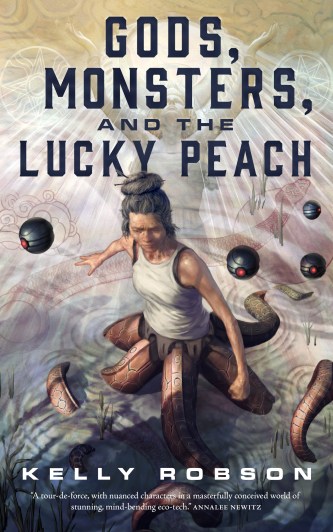
- What’s next for you? Can you talk about stories, collections, or novels you may have coming out in 2019 so we can read more of your work? Thank you for your time and generosity here. I really appreciate it. I have a short-story coming out at The Verge in February. Last year was really great, with stories at Uncanny, Clarkesworld, and in the anthology Infinity’s End, and a big novella Gods, Monsters, and the Lucky Peach from Tor.com, which came out as a book. I’ve been working on the sequel to that and it’s been going—not well. Second books, it turns out, are really HARD. Argh. But all I can do is just keep plugging away!!!
GAK
Posted on January 17, 2019 Leave a Comment

RIP, Gak. You’ll be missed.

We recently lost an artist, a friend, an exemplary role model of human kindness. Gak will forever be with us, his work hanging on walls, filling the pages of books, some of his art even tattooed onto skin. His life will always be remembered because he always made ours a little better.
Below are the illustrations he created for The Library of the Dead, one of his final projects. We had future plans, so perhaps we’ll collaborate on those in the next go-round. Miss you, Gak. Your work speaks for itself …

Illustration for “Those Who Shall Never be Named” by Yvonne Navarro.

Illustration for “The Last Things to Go” by Mary SanGiovanni & Brian Keene.

Illustration for “A Raven in the Dove’s Nest” by Roberta Lannes.
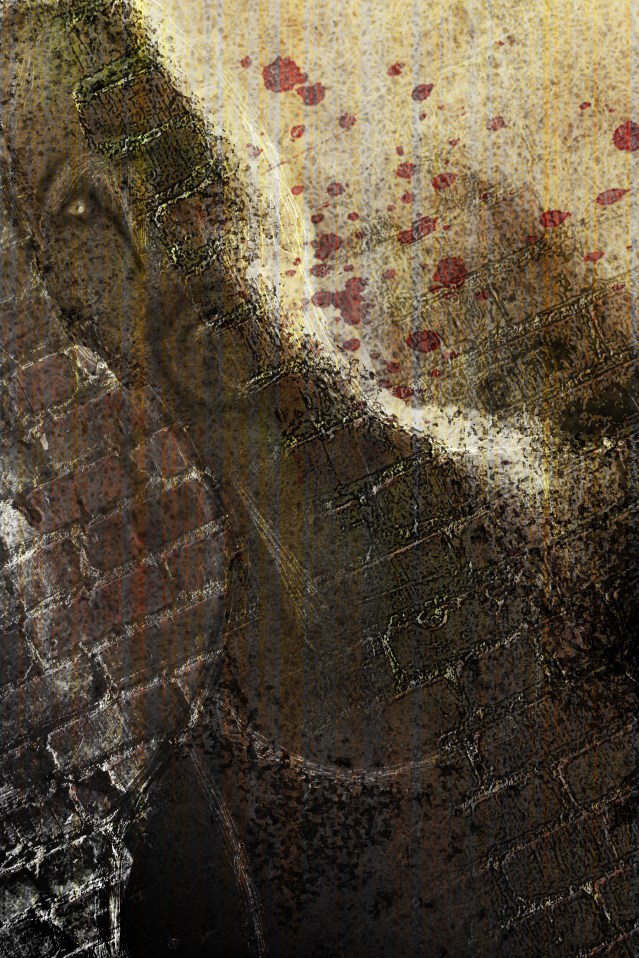
Illustration for “I’m Not There” by Kealan Patrick Burke.

Illustration for “A Chimera’s Tale” by Chris Marrs.

Illustration for “I’m Getting Closer”…
View original post 115 more words
Novel Workshop 365
Posted on January 7, 2019 2 Comments

2020 IS NOW FULL. WE ARE NOW SIGNING UP FOR 2021 AT STORYVILLE.
Instructor: Richard Thomas
Email: storyvillerichard@gmail.com
Skype: richardgthomas3
Class Hours: Fourth Thursday of each month, 3 hours, 7:00 to 10:00 PM CST.
Length: 52 Weeks
Class Size: 8 students
COURSE STATEMENT:
Are you ready to take the next step? I constantly talk about writing short stories, finding your voice, and developing as an author. That’s all very important. But the end goal for many of us is to write a novel (hopefully LOTS of novels). That’s probably the best way to access innovative small presses, and the most common path to acquiring an agent, and landing at one of the big five publishers (and selling your film rights). This class will cover pre-writing (development), writing, editing, and submitting. The end goal is to have a novel over 66,000 words by the end of the year. Not only have I written three novels, but I’ve edited and helped other authors get their work published. The reason I’m teaching this class is to be there to help others go through the process—surrounded by talented peers, and with a safety net and published author to help guide, nudge, push, and advise.

COURSE OBJECTIVE:
To outline, write, edit, and submit a novel in one year.
I’d add PUBLISH here, but we all know the submission process can take months, or even a year (or longer) not to mention the editing, marketing, design, and promotion that will come once you’ve sold that book.
BOOKS REQUIRED:
None. But if you’re looking for good books on the craft, here are my four favorites: On Writing by Stephen King, Writing 21st Century Fiction by Donald Maass, Wonderbook by Jeff VanderMeer, and Thrill Me! by Benjamin Percy.
OVERVIEW:
There are two ways you can come to this class—with a novel written, or not. I will accept students either way. I expect that MOST will come to class with nothing written yet (aside from some notes, ideas, and maybe a handful of scenes). Either way, here are my thoughts and notes on how the year will play out.
You will have daily prompts. Those will be on Facebook, in a private, secret group. We will meet via Skype once a month for about three hours, where each author will get 20 MINUTES to talk about any aspect of their novel. You can talk about what is blocking you, exciting you, or eluding you. You can toss out ideas about the plot, questions about clarity, or how you might subvert your genre—you name it. There will be 12 Skype calls a year.
January—Development and Outline (one month)
We will spend the first month using daily prompts to sketch out your book. We will talk about a wide range of topics, including but not limited to: narrative hook, inciting incidents, plot, character, setting, internal and external conflicts, tension, cast, genre, theme, expectations, innovation, structure, format, climax, resolution, and denouement. (Sound familiar?) If you already have a novel written, you will use the daily prompts to check your work, and go deeper. At the end of the month you will share your content with the class, and give feedback to your peers in a timely manner (a week for outlines, please).
February through June—Writing (six months)
This is where the rubber meets the road. I will give you daily prompts that will push you to write. The early prompts will be about the beginning of the novel—the hooks, the setup, the cast of characters, the pace, early foreshadowing, etc. Then we will look at how the plot unfolds, and how deep you go with secondary plots, themes, and characters. As the book grows we will continuously look at the development of your characters, how we feel about them, sympathy and empathy, how the protagonist/s resonate, the enemy and other villains, and overall voice, tension, and depth of story. As we approach the end, we will make sure this story is staying true to character, surprising us along the way, and being as innovating, fresh, and personal as is possible. All of this is leading to that powerful ending—the climax, resolution, change, and denouement. Does it all add up? Does it work? How do we feel? And what was the journey like? Did it give us everything it promised? If not, then that’s the next stage—editing. You will turn in 11,000 words a month (that’s only about 350 words a day). Our goal is to get you over 65,000 words for the year. Most presses want at least 60,000 for a novel. At the end of the month you will share your content with the class, and give feedback to your peers in a timely manner (a month for this writing and developmental editing, please, also known as a read and respond). If you already have a novel written, you will use the daily prompts to check your work, and go deeper.

July through November—Editing (five months)
Okay, this is not only the most painful part of the process (in my opinion) but also the most exciting. What, you doubt me? This is where you give your novel an honest evaluation, listen to your classmates, and trim the fat. There is something hypnotic and invigorating about looking at each chapter and seeing what works (which is probably MOST of it) and then tweaking, trimming, editing, and polishing—making each section sing. Then we get to go through a number of times to check the grammar, make sure the tense stays consistent, develop the setting (all five senses), enhance the feelings we have about our characters, and make sure their actions match their morality and abilities, while not only embracing the genre/s you are writing in, but subvert those expectations. If you promise us a cheeseburger, you better deliver, but the bun, the meat, the toppings—that’s where you can make it your own. You will not turn in edits each month, but will instead work toward a goal of a final, polished novel, which you WILL share with your peers. (Final feedback from YOU is another read and respond, talking about the overall experience, but from me, it will be a full line-by-line edit.)
December—Submission
You didn’t think I’d abandon you after it was all written, did you? This is where we will do research on small presses, agents, and the big five publishers (and their imprints). We will use a variety of tools and resources to figure out where to send your work. And then you will SEND YOUR BOOK OUT! (My final edits are due back to you 30 to 60 days after the class ends. I need time to do my best work, but I also don’t want to hold you up.)

WHO IS THIS CLASS FOR:
- Advanced students who are looking to take their writing to the next level.
- Experienced authors who have penned many successful short stories, and/or published widely, and are eager to take on the long form. They should have a strong sense of their voice (including strengths and weaknesses).
- Authors who are firmly entrenched in one genre, and feel they have a strong understanding of what is expected and/or those looking to subvert the expectations of that genre.
- Authors who are writing cross-genre and/or hybrid fiction, and are looking to break the mold and innovate across those genres.
- Writers who have the time and discipline to commit an entire year of planning, writing, editing, and submitting this novel.
- Authors who are excited about THIS BOOK and are willing to put their blood, sweat, and tears into this narrative. Story should have the depth to go 66,000 words or more.
- Writers who have enjoyed my other classes.
- Author who have enjoyed my own writing, editing, and publishing (including Gamut and Dark House Press).
PAST SUCCESS:
Other authors and clients I’ve worked with have sold novels to Angry Robot Books, JournalStone, Crystal Lake Publishing, One Eye Press, Post Mortem Press, Perpetual Motion Machine Publishing, Kraken Press, and Perfect Edge Books. Many writers have also landed agents after working with me. Work I’ve edited has been nominated for the following awards and prizes: Bram Stoker, Shirley Jackson, Thriller, Nebula, Folio, and Pushcart.

COST/FINANCING:
This was tricky, but basically what I wanted to do was look at my rates for a developmental edit ($4/page) of a novel, as well as a line-by-line edit of a novel ($8/page), and then the class. For 66,000 words, if the average page is 250 words that’s a 264-page novel. So those costs would be $1,056 + $2,112 = $3,168. My workshops are $800 for 16 weeks and my Dark Fiction Class is $1,200 for 16 weeks, so you COULD extrapolate those out to between $2,400 and $3,600 a year. That would put the grand total at somewhere between $4,268 and $6,768. I decided to price it at $5,000. Here are the discounts:
- Full Price (with payment plan): $5,000
(12 months—$416/month; 24 months—$208/month) - Past Student (10% off, with payment plan): $4,500
(12 months—$375/month; 24 months—$187.50/month) - Past Student (20% off, paid in full): $4,000
For payment plans, there are two obvious options—12 months or 24 months. If you’d like to have the class paid off in full before we start, do 12 months. If you need to stretch it as far as possible to get the lowest monthly rate, do 24 months. I’m willing to work with you all to make this possible. All payments are by Paypal invoice. Other means are possible as well.
NOTE: If your novel goes over 66,000 words, I will bill for the additional length. So, in the developmental stage, that’s at $4/page, which I will bill when we go over (billed in June). With the finished novel, that’s at $8/page, billed when I turn in the completed edits (January or February of 2020). So, if the developmental edit ends up at 70,000 words, I’d bill an additional $64. And if the final manuscripts balloons up to 76,000 that would be an additional invoice for $320 (due upon receipt of the full edit).
FINAL THOUGHTS
I think this class will go a long way toward making your novel happen. Obviously, the heavy lifting is on your end—I can’t write the book for you. But by having my input and guidance during the conception, writing, editing, and submission, I think your chances for success are very high. And the input of your peers is valuable as well. I was part of a similar group, Write Club, for many years, and it helped me a lot when I was writing Transubstantiate and Disintegration. Also, I won’t accept any students that I don’t think are ready to do this. You must have the determination, the talent, and the imagination.
Don’t hesitate to ask any questions! Sign up now at Storyville.
Thanks,
Richard
Ten Ways to Support Your Favorite Authors This Holiday Season
Posted on December 20, 2018 3 Comments

So, you like to read, and maybe you like to write, too. You are a connoisseur, a patron, a Renaissance man (or woman). What can you do this holiday season to support those authors in your life? Here are ten ideas.
01. BUY THEIR WORK. I mean, I know it sounds obvious, but this is the most direct way to help out the authors you love to read. See if they have a new novel out, or a collection, or perhaps they just published in a journal or anthology (you get TWO gold stars for supporting small / indie presses here, as well). I know, it gets expensive. So, think about the voices that you really love, the people you want to succeed. Maybe you set aside a few dollars every month and then spend it at Christmas. Or perhaps you find the work on sale at Amazon, or directly from a small press. I have over 50 entries at my Amazon profile, and they range from 99 cents to 99 dollars. Something for everyone!
02. BUY SIGNED WORK DIRECT. Another possibility if you’re a collector, or really want to put extra money in the author’s pocket is buy directly from them. Most authors will get a few dollars per book when you buy at Amazon or B&N or your local bookstore. But many get extra copies from their publisher, at no cost to them. Some authors BUY extra copies of their own book (at cost, or a great discount) just to resell and help earn a bit of money. Recently I’ve bought signed copies directly from Brian Evenson, Priya Sharma, Stephen Graham Jones, Paul Tremblay, and Maria Dahvana Headley. I love to have that personally signed copy on my shelves.
03. FOLLOW THEM ON SOCIAL MEDIA. So, this doesn’t cost any money! Believe it or not some presses and agents actually LOOK at how many followers authors have, and that’s a BONUS. So, why not friend them on Facebook (or like their author page), and follow them on Twitter. Maybe Instagram, or subscribe to their blog, or their Amazon Profile. And then engage with them! You might learn something about their process, hear about an open call, or just be entertained by their witty comments, and ribald jokes.
04. REACH OUT AND SAY SOMETHING NICE. I know this can be a bit stressful, the idea of reaching out to your heroes and idols, or even just other authors and peers you know, but BELIEVE ME, a kind word about a new story or novel, or past work, can really make an author’s day. They may be struggling—to create, to believe, to push through a block. I love to hear from friends, peers, students, and strangers about my writing—it always thrills me when somebody says a story of mine scared them, or inspired them, or helped them to take chances with their own prose. Every year when I read the Best Horror of the Year, and other anthologies, when I read a story that blows me away—I reach out to that author. I connect on social media (see #3. I usually drop them a private message via Facebook, and then Tweet publicly to them on Twitter. Nothing fancy, just along the line of, “Hey Livia, I loved your story ‘Allochthon’ in Best Horror, wow, that was intense, so visceral, and unsettling. Keep up the great work.” I’ll do that for authors I’ve known for years (HI STEPHEN!) as well as voices that are new to me. ESPECIALLY if they are emerging, or new to me.
05. SPREAD THE WORD. Once you’ve followed them on social media, it’s easy to retweet, share a post, or engage. So do that. And if you go on to buy that book, or collection, talk about that too! Post pictures! Just be sincere and spread the word. Do whatever you’re comfortable with, it all helps. Support their Kickstarter, retweet about their new book, share that post about an upcoming class they are teaching, etc.
06. POST REVIEWS. If you read a novel, collection, or anthology, take a moment and post up some kind words on Amazon and/or Goodreads. Don’t worry about writing some eloquent review, just speak from the heart. Talk about what you liked, how it made you feel, what it reminded you of, how it was innovative, whatever you like. If you ARE great at writing reviews, then DO take the time to write something polished. Those deeper reviews not only sell books, but can help an author to get through a dark day as well. Whatever you can share—it all helps.
07. SEE THEM LIVE. If you get a chance to see one of your favorite authors speak, go do it! Not only is it a lot of fun, but nothing makes an author happier than reading to a packed bookstore or auditorium. To look out at a sea of happy, smiling, supportive faces? Wow, that’s a great feeling. (And while you’re there, buy a book and have them sign it.)
08. TAKE A CLASS. If you’re an author, and you have the extra money, and that author you love so much is teaching somewhere (online or in person) why not study with them? Part of what got ME writing at the age of 40 (I’m 51 now) was the chance to study with Craig Clevenger. He taught me so much, and pushed me to submit work from his class, which ended up being my first professional sale (“Stillness” in Shivers VI at Cemetery Dance, alongside Stephen King and Peter Straub). I ended up taking THREE classes with Craig. I also studied under Monica Drake, after reading her novel Clown Girl. And then Max Barry. Later, with Jack Ketchum (RIP, brother), and then Stephen Graham Jones. Those were all wonderful experiences for me. Each author taught me something different, and I’m friends with most of them in real life, as well.
09. DROP THEIR NAMES WHEN INVITED IN. Some of you may be at the point in your career where you have a little bit of influence. Kudos. Way to go. The next time you get invited into an anthology, be sure to ask if the TOC is full. If it’s not, and the editor needs names, share with them the voices that inspire you, and who knows—you may get to publish alongside a hero of yours. I not only drop names of authors I like, but I push for diversity and inclusion. I always ask about the ratio of men to women in the anthology (or just comment on it if the TOC they show me is all SWM). Nothing pushy, just, “Do you need any names? Are you short on women? Great, here are a few authors I love.” And I also look for authors of color, and suggest them as well. You may not be in this position now, and it may be awkward the first time you do it, but trust me—any editor that bristles at the idea of diversity, is probably somebody you don’t want to work with anyway.
10. INVITE THEM IN. Likewise, if you ever get to a position of power, say an editor at a magazine, or an anthology, be sure to reach out to those authors that inspired you over the years. Sure, the paycheck is great, but it’s just as important to show those authors that you value their work. Invite them in to that anthology you’re editing, reach out when you have a new issue of a magazine coming out and the theme submissions aren’t what you expected, or just make sure they know about the open call, and that you’d love to see something from them. Authors, we’re a bipolar bunch. One day we’re KING OF THE WORLD, the next an obvious hack and imposter. I can tell you that it is THRILLING to see authors I came up with, or past students that I’ve taught, evolve and grow, eventually running magazines, journals, and presses. Whenever they reach out to me and ask for work, it’s so flattering, so exciting. It means the world to me.
So, whatever you can do this holiday season (and all year long) it all matters, it all helps. Spending money on the authors you love is one way to support them, but it’s just as important to share your kind words, and help spread the word about the voices that haunt, entertain, and inspire you. Happy Holidays!
WHO’S WHO / THE LIST
Posted on December 7, 2018 Leave a Comment
The complete WHO’S WHO of Written Backwards. Honored to be on here FIVE TIMES. Hopefully many more partnerships to come. If you’re not reading the work that Written Backwards and Michael Bailey are publishing, you’re missing out.
Written Backwards has survived over the years publishing a wide array of creativity: short stories, novelettes, novellas, poetry, illustrations and, most recently, graphic adaptations. Most of the work appears in original anthologies, but a few select novels, debut fiction collections, and other strange projects have popped up over the years.
The goal: to seek diverse work, to push literary boundaries, to create the most beautiful books imaginable (and to provide professional-rate payments to contributors when at all possible). The result: a who’s who list of writers and artists. Millions of words. Hundreds of illustrations. Familiarize yourself with these wonderful people.
So, just who has Written Backwards published over the years, and where? Here’s a start, alphabetically by last name. All are short stories (unless specified, like this).
Addison, Linda D.
- “Things That the Earth No Longer Bears” (poem) and “Life Poems” (a series of haiku) – Stokercon 2018 Anthology © 2017
View original post 4,472 more words
The Top A24 Films, and Where to Start
Posted on November 30, 2018 6 Comments

Illustration by Luke Spooner
Warning: There are spoilers below. Also, all data, figures, and rankings were accurate as of August 2, 2018.
In an age of remakes, spin-offs, and watered-down franchises, A24 Films is bringing unique movies to the big screen, with astounding results. A film distribution company rarely gets much attention—they are behind the scenes, unnoticed. They buy movies, design the movie posters and movie trailers, and get the films into the theaters. But starting in 2012, that logo crisscrossing the film screen started to mean something. It was Pavlov ringing a bell, and I was a dog, salivating.
“It wasn’t just that, for a new distribution company, it seemed to have a level of taste and an instinct for cool that is atypical in Hollywood. It was also that A24 was releasing these films not with a sigh and a shrug, but with panache, style, and humor,” said GQ Magazine. In the same article, director Alex Garland continued, “I would say that if Ex Machina had been distributed by a big studio—this isn’t actually a criticism of studios; it’s actually just a statement of fact—the film would not have been remotely as well received or successful as it was.”
Ex Machina. Under the Skin. Room. Amy. Enemy. Green Room. Moonlight. The Witch. The Lobster. Swiss Army Man. It Comes at Night. A Ghost Story. The Killing of a Sacred Deer. Lady Bird. The Disaster Artist. And most recently, Hereditary.
Do you recognize these titles? You should.
All A24 Films.
When it comes to the new-weird, indie films, original perspectives, and innovative takes on genre, A24 is getting a lot of attention—award nominations, and wins. And making some money. How? By appealing to more than the standard fan base—smart movies, shocking movies, films that surprise, and move you, that leave you unsettled.
What are the top movies that A24 has put out, to date? Where should you start? Let me make a few lists, consult a few websites and appendixes, and see if I can’t wrangle you a weekend, or three, of quality motions pictures.
BIG AT THE BOX OFFICE
Let’s look at the top five films distributed by A24 Films, as far as gross sales in the USA. What do they have in common? You might be surprised at the list.

The Witch movie poster
FIVE. The Witch—$25M (2016)
In 1630s New England a family leaves their Puritan plantation, setting out to survive on their own in the remote wilderness. From an unknown director (Robert Eggers in his debut) this moody, slow burn of a horror film both upset and thrilled viewers. It was not a slasher, not your standard horror fare—no, this was religious fervor that turned a family against itself, while bad things happened in the woods just out of sight (and sometimes, revealed in the shadows). Anya Taylor-Joy (Split) is compelling as Thomasin, our main character, and we see how hard she works, though her parents are quick to blame her for everything that goes wrong. As each member of the family slowly loses their mind (and their lives) the darkness creeps in closer, ultimately corrupting Thomasin, in a scene with Black Philip that has been quoted and elevated to meme status: “Wouldst thou like to live deliciously?” (Yes, we would, it turns out.) The final scene cements this experience, splitting the audience, but showing us a fate that was unavoidable—the only choice left to an already tainted, and abandoned, Thomasin.

Ex Machina movie poster
FOUR. Ex Machina—$25M (2015)
Directed by Alex Garland, this science fiction thriller starred several emerging actors—Oscar Isaac (Star Wars: The Force Awakens), Alicia Vikander as A.I. Ava (Jason Bourne, Tomb Raider), and Domhnall Gleeson (Black Mirror, The Revenant). A smart, layered film, this movie didn’t appeal to the lowest common denominator, either—it challenged us to keep up, to test us as Ava worked to pass her own Turing test. Visually stunning (winning an Academy Award for Best Visual Effects) we are manipulated along with the cast, feeling a wide range of emotions along the way. The empathy and sympathy are handled well, with an ending that will leave you reeling. It doesn’t take much imagination to tack on the words “deus es” to the title, turning this film into “God from the machine,” adding additional philosophical discourse to the end of the film—is it God, the machine, or man who is responsible? And what happens next? Similar themes are playing out on Westworld, as we speak. It’s hard to say if this film helped launch the current movement of “smart science fiction,” but there have been a number of movies that have followed Ex Machina, and challenged audiences—mentally, spiritually, emotionally, and intellectually. Arrival (2016), comes to mind, as does Annihilation (2018)—both based on literature: Ted Chiang’s short fiction, “Story of Your Life,” and Jeff VanderMeer’s novel of the same name, respectively.

Moonlight movie poster
THREE. Moonlight—$27M (2016)
I mean, if you want to get some attention, this is the way to do it. Moonlight was a powerful film that got a lot of recognition—nominated for eight Academy Awards and five Golden Globes. It won the Oscar for Best Picture, Best Supporting Actor to Mahershala Ali (House of Cards, Luke Cage, and The Curious Case of Benjamin Buttons), and Best Adapted Screenplay, winning the Golden Globe for Best Motion Picture-Drama, too. It was the first film with an all-black cast, the first LGBT film, and the second lowest-grossing film domestically (behind The Hurt Locker) to win the Oscar for Best Picture. This coming-of-age story deals with sexuality and identity, physical and emotional abuse, as well as bigotry. The triptych structure (i. Little ii. Chiron iii. Black) helps to show the split and divide that haunted the main character, Chiron (who is played by three different actors). Written and directed by Barry Jenkins, Moonlight is based on Tarell Alvin McCraney’s unpublished semi-autobiographical play, In Moonlight Black Boys Look Blue.

Hereditary movie poster
TWO. Hereditary—$43M (and climbing) (2018)
One of the best horror films I’ve seen in a long time, Hereditary is about a family, and their tainted bloodline, and how the presence of something old, and evil, manifests in them. Much like The Witch, this film built on the success of defying expectation, of elevating horror to a new level—not just through the use of violence (though there is some, in crucial moments) but psychological terror, gradually increasing tension, and moments of temporary madness. I cannot remember the last time I was so genuinely scared in a movie—skin crawling, head spinning, brow sweating. I’d be remiss if I didn’t mention the exceptional cinematography and sound—a beautifully haunting movie that keeps your attention from the opening credits, never letting up. Cluck. And the casting—Toni Collette (The Sixth Sense) brilliantly chosen at the mother, Annie; Gabriel Byrne (The Usual Suspects) in a subtle, creepy turn as the father, Steve; Alex Wolff as the son, Peter; Milly Shapiro as the unsettling Charlie (that car ride!); and Ann Dowd in a guest performance (The Handmaid’s Tale) as Joan, a friend of the family. A must-see movie on the biggest screen you can find.

Lady Bird movie poster
ONE. Lady Bird—$48M (2017)
And at the top of the list, is a comedy, Lady Bird, a coming-of-age story starring Saoirse Ronan (Hanna) as “Lady Bird,” and Laurie Metcalf (Roseanne) as her mother. While the previous films on this list were science fiction, horror, and drama, this comedy (with dramatic moments) is a pleasant change. A24 Films embraces comedy, and this story, set in 2002 in Sacramento, California, showcases humor with depth. Written and directed by Greta Gerwig (Frances Ha), many felt that she was snubbed at both the Golden Globes and Oscars, and women directors in general. (Though Lady Bird did win several Golden Globes for Best Motion Picture-Comedy, and Best Actress-Comedy, for Saoirse Ronan. Gerwig did get a nomination for Best Director at the Oscars.) One of the things I liked most about this film, and you may notice a theme here, is the fact that I was surprised throughout. Whether it was Lady Bird opening the door to her car and tumbling out in a moment of rage and desperation, or the emotion that swept over me at the end of the movie, the suitcase full of letters from her mother—Lady Bird got to me. It was funny, honest, and not without bite.
So, what are some other ways we can figure out what A24 Films to watch? I have a few ideas, and quick thoughts.
TOP TEN IMDB
- Eighth Grade (2018) 8.2
- Room (2015) 8.2
- Amy (2015) 7.8
- Ex Machina (2014) 7.7
- Hereditary (2018) 7.6
- The Florida Project (2017) 7.6
- First Reformed (2017) 7.6
- Lady Bird (2017) 7.5
- The Disaster Artist (2017) 7.5
- Moonlight (2016) 7.5
If we take the top ten A24 Films, according to IMDB (Internet Movie Database), this should help expand our list. A few notes on the films that haven’t been mentioned yet.
Eighth Grade just came out, so I haven’t seen it yet, unfortunately. Room, based on the novel by Emma Donoghue, won an Oscar for Best Actress (Brie Larson). Amy was a tragic documentary about singer Amy Winehouse. The Florida Project follows a young girl through the shadows of Walt Disney World, with Willem Dafoe. First Reformed stars Ethan Hawke as a priest of a small congregation in upstate New York. And The Disaster Artist? I mean, where to start. You’ve probably heard of Tommy Wiseau and his film, The Room, by now (not to be confused with the aforementioned Room). This film is widely touted as quite possibly the best worst movie ever made. And you may have seen James DeFranco’s Golden Globe acceptance speech, with Tommy on stage, trying to grab the mic. Let’s just say this is a rabbit hole that is worth going down—from the memes and catch phrases that have popped up (“Oh hi, Mark,” and “You’re killing me, Lisa” both come to mind), to Tommy in general, to the original film, and then this take on what happened—it’s all worth it.

The Disaster Artist mug shot
METASCORE
- Moonlight (2016) 99
- Lady Bird (2017) 94
- The Florida Project (2017) 92
- Eighth Grade (2018) 90
- Hereditary (2018) 87
- Room (2015) 86
- Krisha (2016) 86
- Amy (2015) 85
- First Reformed (2017) 85
- A Ghost Story (2017) 84
A24 Film’s Metascore (at Metacritic) is similar to Rotten Tomatoes, weighing critics and the public together. And they happen to track A24 Films specifically, so, what movies on this list have we not mentioned yet? Only two. Krisha is a drama about a woman who returns for a Thanksgiving dinner to suburban Texas after ten years apart from her family. Of course things go wrong—past transgressions and personal issues coming up. And, A Ghost Story (with Casey Affleck and Rooney Mara). I know people were split on this film, some saying it wasn’t scary at all. It’s a slow, dramatic film, with very little dialogue, but when it comes to horror, it’s all very subjective. Some thought The Blair Witch Project was dull, but the ending terrified me. Paranormal Activity freaked me out. And of course we’ve already talked about The Witch, and Hereditary. The one thing you can say is that A Ghost Story is not your conventional horror movie.

Casey Affleck (left) and Rooney Mara (right) in A Ghost Story
THEIR WEIRDEST FILMS
And then there are those films that simply defy expectation—surreal, bizarre movies, that are impossible to categorize. I had to pull a few descriptions from A24 Films and IMDB, because I was having a hard time figuring out how to even sum these movies up! Swiss Army Man (2016)—“Hank (Paul Dano) is stranded on a deserted island, having given up all hope of ever making it home again. But one day everything changes when a corpse named Manny (Daniel Radcliffe) washes up on shore; the two become fast friends, and ultimately go on an epic adventure that will bring Hank back to the woman of his dreams.” (A24 Films) The Lobster (2015)—(with Colin Farrell and Rachel Weisz) is an absurdist, black comedy: “In a dystopian near future, single people, according to the laws of The City, are taken to The Hotel, where they are obliged to find a romantic partner in forty-five days or are transformed into beasts and sent off into The Woods.” (IMDB) Locke (2013), starring Tom Hardy, which was shot almost entirely inside a BMW X5. And, The Killing of a Sacred Deer (2017) again, with Colin Farrell, as well as Nicole Kidman: “Steven, a charismatic surgeon, is forced to make an unthinkable sacrifice after his life starts to fall apart, when the behavior of a teenage boy he has taken under his wing turns sinister.” (IMDB) If you’re looking for something offbeat and eccentric, these choices are for you.
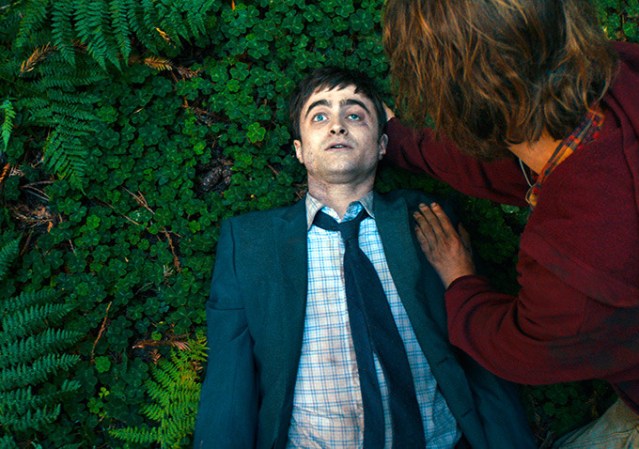
Daniel Radcliffe (left) and Paul Dano (right) in Swiss Army Man
RECENT AWARDS
Sure, why not look at the A24 Films that have won awards, too!
Academy Award Winners—2016: Best Actress (Brie Larson, Room), Best Documentary (Amy), Best Visual Effects (Ex Machina), Best Motion Picture (Moonlight).
Golden Globe Winners—2016: Best Actress—Drama (Brie Larson, Room); 2017: Best Motion Picture—Drama (Moonlight); 2018: Best Motion Picture—Comedy (Lady Bird), Best Supporting Actor—Comedy (James Franco, The Disaster Artist), Best Supporting Actress—Comedy (Saoirse Ronan, Lady Bird).
MY TOP TEN
- Under the Skin (2013)
- Hereditary (2018)
- The Witch (2016)
- Enemy (2013)
- Ex Machina (2015)
- A Ghost Story (2017)
- Lady Bird (2017)
- The Lobster (2016)
- The Killing of a Sacred Deer (2017)
- Locke (2013)
And here is my personal list. You’ll recognize quite a few from other lists—best-selling movies, IMDB, and Metascore, as well as the section on “weird” films. But there are a few on here we haven’t spoken about yet. And I think they’re essential viewing. Under the Skin is a movie I have watched every year since it came out, even tracking it down to a big screen recently, and I think this is Scarlett Johansson’s best work to date. I liked her a lot in Ghost World, and Lost in Translation, but everything you’ve ever thought may have held her back as an actress is an asset in this film. Don’t watch the trailers, don’t read a synopsis at IMDB or anywhere else, don’t read reviews online (it’s very easy to spoil this film) just go rent it now. It is a stunning arthouse film, and it elevated Jonathan Glazer (Sexy Beast) to a whole other level, in my opinion. Enemy is another film that may have gone under your radar. I think it’s a stellar performance by Jake Gyllenhaal. Directed by Denis Villeneuve (Arrival, Blade Runner 2) this is a beautiful, gritty, tense film that takes truth and identity to some very interesting places. The ending alone should keep you up at night, not just wondering, “What the hell just happened?” but also, “What does it all mean?”
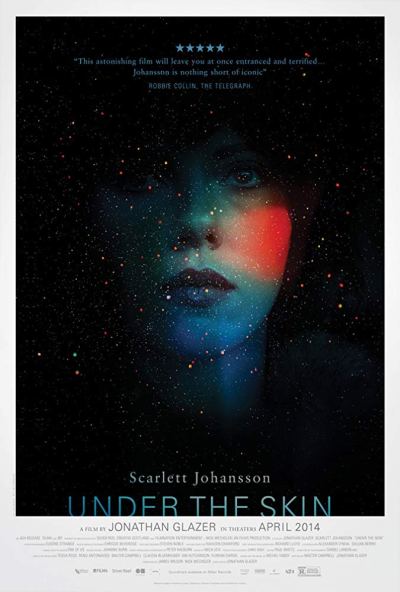
Under the Skin movie poster
IN CONCLUSION
So now you have quite a few ideas of where to begin with A24 Films. You can start with the movies that have done well at the box office, for sure. I mean, can 48 million people be wrong? Or you can look at the films that the critics liked, the award-winners. And you can of course consult a few of these handy lists. Or seek out the weirder offerings. Or maybe your personal aesthetic aligns with my own. What’s important here is that you start seeking out A24 Films, in general. Catch them on the big screen; some don’t last that long. (Under the Silver Lake in April of 2019 looks great.) Or rent a few and scurry down the rabbit hole with me. What I can tell you now is that the A24 logo at the start of a film is going to be your own ringing bell, a signal of great things to come. Buckle up and get comfortable—A24 Films is the new purveyor of all things innovative, thought-provoking, and inspiring. You don’t want to miss out.
Gamut Magazine has EIGHTEEN stories and poems on the Best Horror of the Year Honorable Mention List!
Posted on September 11, 2018 2 Comments

Thrilled to announce that EIGHTEEN Gamut stories and poems made the
honorable mentions list for Best Horror of the Year 9, edited by Ellen Datlow.
Here is the list:
Clark, Chloe N. “Like the Desert Dark,” Gamut #5.
Coney, S. L. “Prey,” Gamut 10.
Haskins, Maria “Metal, Sex, Monsters,” Gamut #5.
Jones, Holly Goddard “Parts,” Gamut #5.
Jones, Stephen Graham “Love is a Cavity I Can’t Stop Touching,” Gamut #2.
Jones, Stephen Graham “The God of Low Things,” Gamut #5.
Jonez, Kate “The Moments Between,” Gamut 7.
Jordan, Judy “Pete’s Lake,” (poem) Gamut #1.
Kassel, Mel “The Stammering Man,” Gamut 6.
Khaw, Cassandra “My Mama,” (poem) Gamut #5.
Khaw, Cassandra “The Truth That Lies under Skin and Meat,” Gamut 8.
McSorley, Andrew “Poachers,” (poem) Gamut 11.
Rather, Lina “Baby Teeth,” Gamut 11.
Reitan, Eric “The Bubblegum Man,” Gamut #1.
Tobler, E. Catherine “Figure 8,” Gamut #2.
Trent, Letitia “Rest Stop,” Gamut #5.
Walters, Damien Angelica “What They Lost in the Storm,” Gamut 8.
Yardley, Mercedes M. “The Absolutionist,” Gamut 10.
Best Horror of the Year 9 Honorable Mentions List. I MADE IT!
Posted on September 11, 2018 Leave a Comment

Thrilled that my story, “Nodus Tollens” made Ellen Datlow’s Honorable Mentions list for Best Horror of the Year 2017. Congratulations to everyone else that made it, too—so many friends. Very cool.
Guns, Drugs & Money
Posted on August 28, 2018 Leave a Comment

DISINTEGRATION in great company here.

We thought we’d share another seven of our favorite reads with you, this time featuring novels and novellas with a thread of organization running through them. Organized crime, that is. With mobsters, drug dealers, cartels, and gangsters galore, there’s something we really love about this type of fiction and, given the selection, we think you will too. So, let us just drop a quick disclaimer here, and then we’ll get on to this list of must read books running the gamut from crime to horror and all points in between. The disclaimer: we are aware that this is pretty much a sausage fest and would like to point out that isn’t intentional. We love women authors as much as any other and would never seek to exclude or denigrate their work. This list merely reflects the favorites we’ve read in genre fiction that fit the theme we’re embracing here today…
View original post 1,570 more words
 - Richard Thomas -